Upcycling arrived in Singapore the way most worthwhile things do: quietly, through the side door, carried by people who had more imagination than money and more stubbornness than sense. You can trace its emergence to HDB void decks where aunties gathered to transform old clothing into quilts, to workshops in community centres where migrant workers learned to turn pallets into furniture, and to the studios of artists who saw beauty in what others threw away. The practice has since spread through the island like a benign contagion, infecting households and offices with the radical notion that waste might be merely misunderstood potential. In a nation that generates 7.6 million tonnes of refuse annually, this perspective shift carries weight beyond its humble origins.
The Characters Who Lead the Way
In Tiong Bahru, there lives a woman named Mrs Lim who has not purchased a storage container in twelve years. Her pantry gleams with repurposed glass jars, each labelled in her precise handwriting. She collects them from neighbours, washes them with the devotion others reserve for heirloom china, and organises them by size in her kitchen cabinets. When asked why she bothers, she looks puzzled by the question. “These are perfectly good jars,” she says, as if this explains everything. And perhaps it does.
Across town in an office building near Raffles Place, a facilities manager has quietly revolutionised his workplace’s approach to furniture. When departments renovate, he intercepts desks and chairs destined for disposal. With sandpaper, paint, and weekend afternoons, he transforms them into pieces indistinguishable from new. His colleagues call him eccentric. His budget reports call him brilliant. The company has saved over 50,000 dollars in three years through his efforts in furniture upcycling.
Beginning Your Own Practice
The entry point requires neither special skills nor significant investment. Start, as Mrs Lim did, by pausing before disposal. That moment of hesitation, that brief assessment of an object’s remaining potential, marks the beginning of creative upcycling. Consider what you regularly discard:
- Glass jars from sauces, jams, and spreads can become storage containers, vases, or candle holders with simple cleaning
- Cardboard boxes transform into drawer dividers, gift boxes, or children’s craft projects through cutting and decorating
- Old towels and sheets become cleaning cloths, eliminating the need for disposable alternatives
- Tin cans serve as desk organisers, planters, or utensil holders after removing labels and smoothing edges
- Wooden crates and pallets convert into shelving, coffee tables, or vertical gardens with basic carpentry
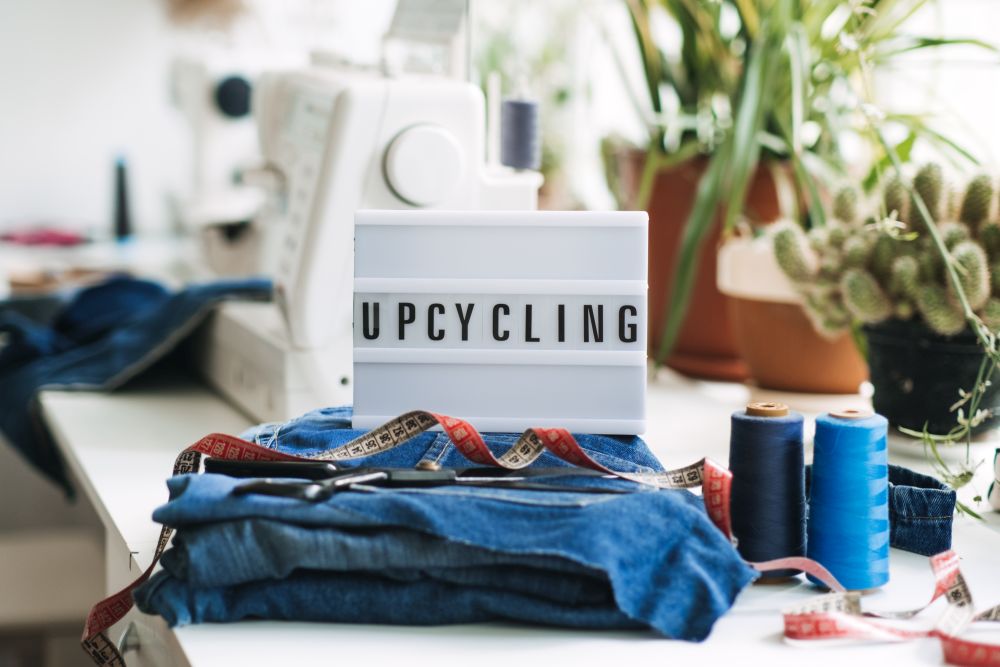
- Worn clothing provides fabric for bags, quilts, or cushion covers through simple sewing
The tools needed are modest: scissors, glue, paint, sandpaper, and perhaps a drill for more ambitious projects. Many community centres across Singapore now maintain tool libraries, recognising that access to equipment often determines whether projects succeed or languish as good intentions.
The Office Revolution
Workplaces present unique opportunities for waste upcycling due to their scale. One shipping office in Jurong has made sport of transformation. Pallets that once carried goods across oceans now serve as room dividers and standing desks. Damaged packaging materials become padding for storage areas. The shift began with one employee’s suggestion and spread through the office like gossip, which in a way it was: gossip about what was possible.
The financial officer initially resisted, citing concerns about appearance and professionalism. Then she calculated the savings. Office furniture in Singapore costs dearly. Upcycled materials cost substantially less. The aesthetic objections vanished when confronted with budget realities. Now the office displays its upcycled furnishings with pride, each piece bearing a small plaque noting what it once was and what it has become.
Learning from Others
The most valuable resource in Singapore’s upcycling movement is not material or monetary but human. In community centres from Bedok to Yishun, practitioners gather to share techniques and inspiration. These sessions have the casual intimacy of church socials, with participants arriving bearing their latest projects like offerings.
A Filipino domestic worker displays bags sewn from old curtains, sold online to supplement her income. A retiree demonstrates how to restore vintage furniture, techniques learned in his youth and dormant for decades. A young designer shows how to transfer images onto fabric using simple household materials. The knowledge flows freely, unhoarded, because the problem it addresses affects everyone.
The Practical Benefits
Singapore’s National Environment Agency reports that only 52 per cent of waste gets recycled, leaving nearly half for incineration. upcycling items addresses this gap by extending product lifespans before materials enter waste streams. The environmental mathematics are straightforward: every object kept in use is one less manufactured, transported, purchased, and eventually discarded.
The financial mathematics prove equally compelling. Families practising regular upcycling projects report savings ranging from 100 to 500 dollars annually, money once spent on storage containers, furniture, and decorative items now created from materials already at hand.
The Larger Picture
What began with Mrs Lim’s jars and the facilities manager’s furniture has evolved into something larger: a quiet questioning of Singapore’s relationship with consumption and waste. The government has set ambitious targets for waste reduction, aiming for zero waste by 2030. But laws and infrastructure alone cannot achieve such goals. They require citizens willing to see differently, to value transformation over disposal, to invest time where others invest money.
The practice spreads not through mandates but through example, through neighbours noticing Mrs Lim’s jars and the office admiring its repurposed furniture. It spreads through children learning these skills and carrying them forward. And it spreads through the simple satisfaction of creating something useful from what others abandoned, of seeing potential where the market sees none, of practising the quiet subversion that is upcycling.